



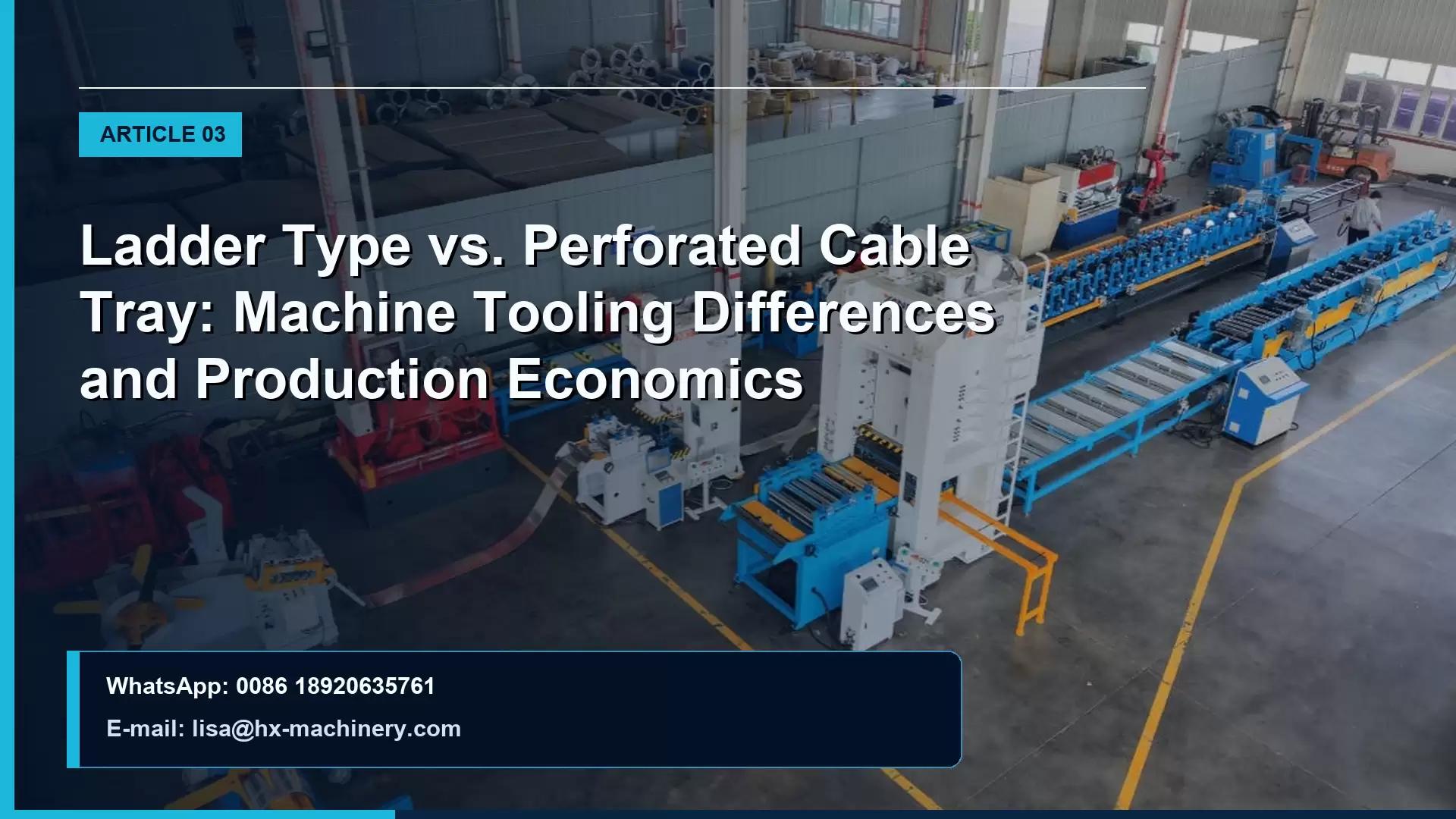
Electrical engineers and facility designers select cable tray profiles based on heat dissipation, physical protection, and environmental corrosivity. In commercial buildings and industrial processing facilities, two profiles dominate specifications: Ladder Cable Trays and Perforated (Ventilated Trough) Cable Trays.
For equipment buyers and plant managers, understanding the distinct manufacturing lines, tooling structures, and capital economics required for these two designs is vital before investing in capital machinery.
1. Architectural and Functional Differences
- Ladder Cable Tray: Consists of two continuous roll formed C-channel or I-beam side rails connected by transverse rungs spaced at 150 mm, 225 mm, or 300 mm intervals. It offers unmatched ventilation for heavy-gauge power distribution cables, preventing heat buildup and cable derating.
- Perforated Cable Tray: Consists of a single continuous sheet formed into a wide U-channel with thousands of stamped ventilation slots across the bottom web. It supports smaller instrumentation, control, and telecom cables, preventing localized cable sagging while maintaining moderate airflow.
2. Roll Tooling and Mechanical Architecture Comparison
The machinery architecture for ladder trays versus perforated trays diverges significantly:
Producing ladder trays requires two separate manufacturing stages: first, rolling the heavy-duty side rails with pre-punched rung-mounting slots; second, manufacturing the rungs (via a smaller C-channel or tube roll former) and joining them to the rails using hydraulic swaging, riveting, or automatic MIG resistance welding.
In contrast, a trough type cable tray machine creates the entire tray body from a single master coil in one continuous, automated sequence.
3. Punching Tooling Maintenance and Life Expectancy
Perforated trays demand intense stamping cycles. A line running at 10 m/min punches thousands of rectangular and oval slots every minute.
- Punch Pin Wear: Inferior tool steels suffer premature dulling, creating heavy edge burrs that snag cables. HOPEX equips its punch dies with Cr12MoV or imported DC53 tool steel inserts, vacuum-hardened to HRC 62, delivering over 1.5 million strokes before requiring resharpening.
- Side Rail Punching: Ladder rail machines punch heavy connector holes and rung retention slots in 2.5 mm to 3.0 mm structural steel, requiring high-tonnage hydraulic cylinders with internal oil cooling circuits to prevent thermal oil breakdown during double-shift operations.
4. CAPEX, OPEX, and Market Entry Strategy
For start-up manufacturers entering the cable management sector, a perforated/trough line represents the lowest barrier to entry. It requires a single machine operator, eliminates secondary welding assembly, and satisfies over 70% of standard commercial building requirements.
However, established fabricators serving heavy petrochemical, mining, or utility power plants must invest in a heavy-duty ladder side-rail roll former and automated rung welding cell to bid on high-margin utility tenders.
