



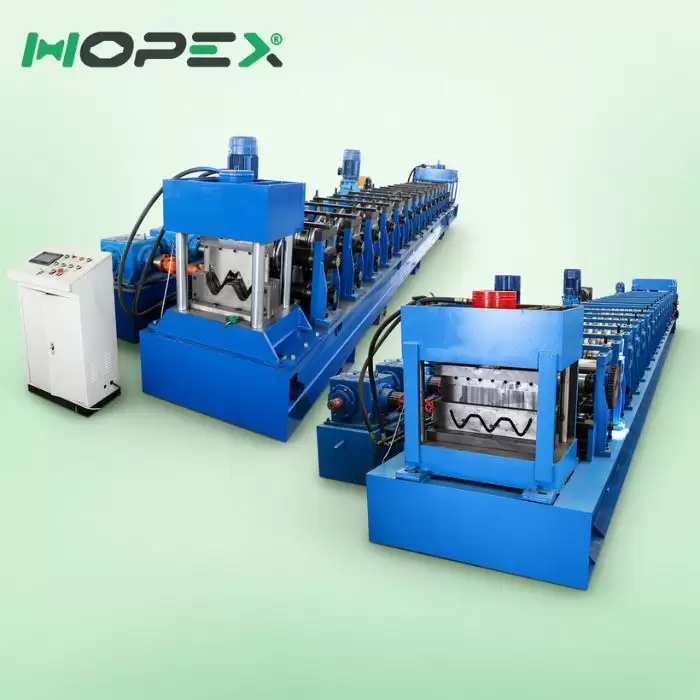
W-Beam vs Thrie-Beam Guardrail: Which Roll Forming Machine Do You Need?
Behind every kilometer of highway guardrail is a precision roll forming machine. If you're entering the guardrail manufacturing business, the first choice is simple but critical: 2-wave (W-Beam) or 3-wave (Thrie-Beam)?
W-Beam (2-Wave): The Workhorse
The W-Beam is the most common guardrail globally — a two-corrugation semi-rigid barrier designed to deflect on impact and absorb energy.
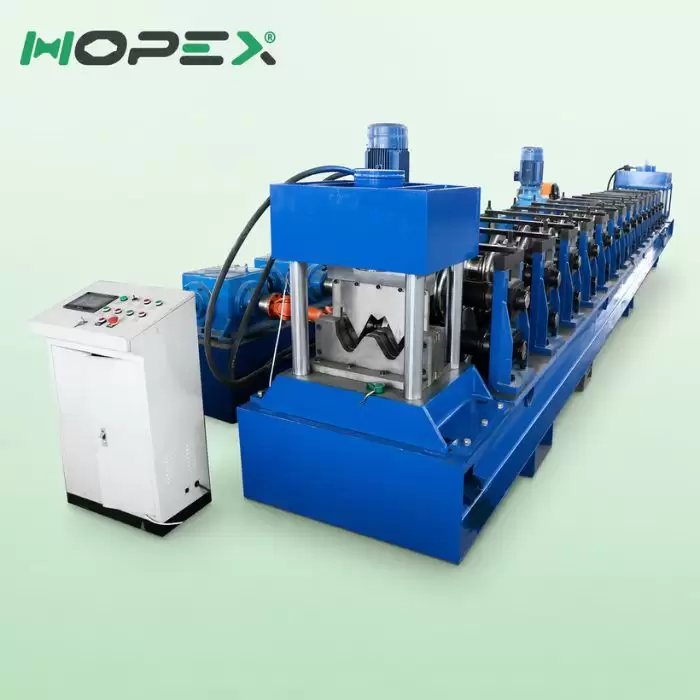
Material: Galvanized steel, 2.0–4.0 mm thick, 465–475 mm feeding width
Applications: Standard highways, rural roads, medians on divided roads — where cost-effectiveness matters most
Machine key specs: 15–18 forming stations, Cr12MoV rollers, production speed 5–15 m/min
Thrie-Beam (3-Wave): The Heavy-Duty Upgrade
With three corrugations and a deeper profile, Thrie-Beam provides significantly higher containment — it's deployed where W-Beam is not enough.
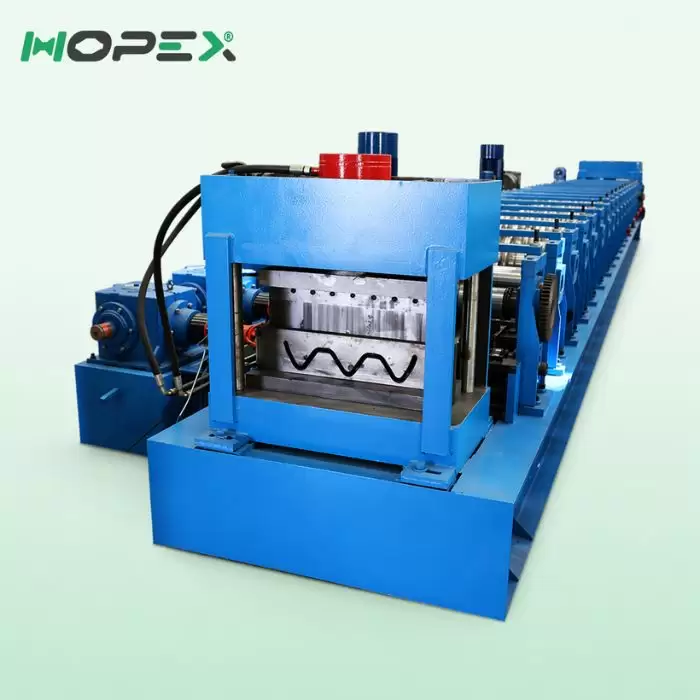
Material: Same thickness range, but larger profile depth (typically 483 mm vs 312 mm for W-Beam)
Applications: High-speed freeways, sharp curves, bridge approaches, and areas with heavy truck traffic where crossover accidents would be catastrophic
Machine key specs: Same station count but requires a heavier frame (500H beam) to handle the increased forming resistance
Quick Comparison
| Type | W-Beam | Thrie-Beam |
| Corrugations | 2 | 3 |
| Containment | Standard vehicles | Heavy trucks & buses |
| Cost | Lower | ~30–40% higher |
| Best for | Standard roads | High-risk sections |
One Line, Two Profiles?
A well-designed machine can switch between both profiles by swapping roller sets (30–60 minutes changeover). If you need both in high volume, dedicated lines pay for themselves in uptime alone.
HOPEX has been manufacturing guardrail roll forming lines since 2003 — Cr12MoV hardened rollers, dual 22KW drive, Delta/Siemens PLC, 24-month warranty. Send us your profile drawings for a tailored quote.
WhatsApp: 0086 18920635761
E-mail: lisa@hx-machinery.com
